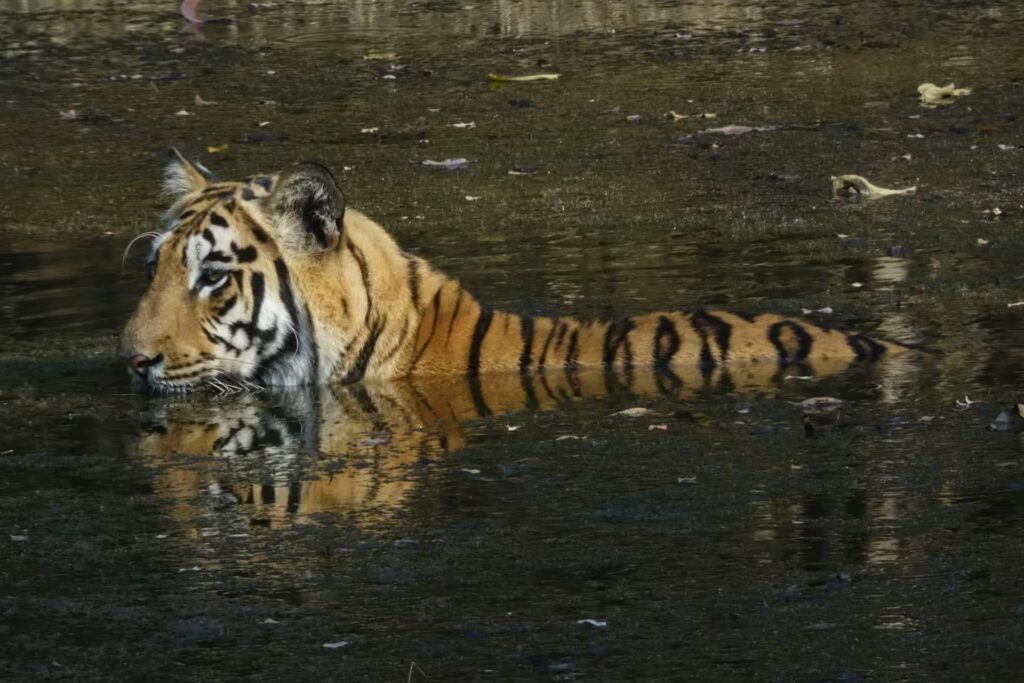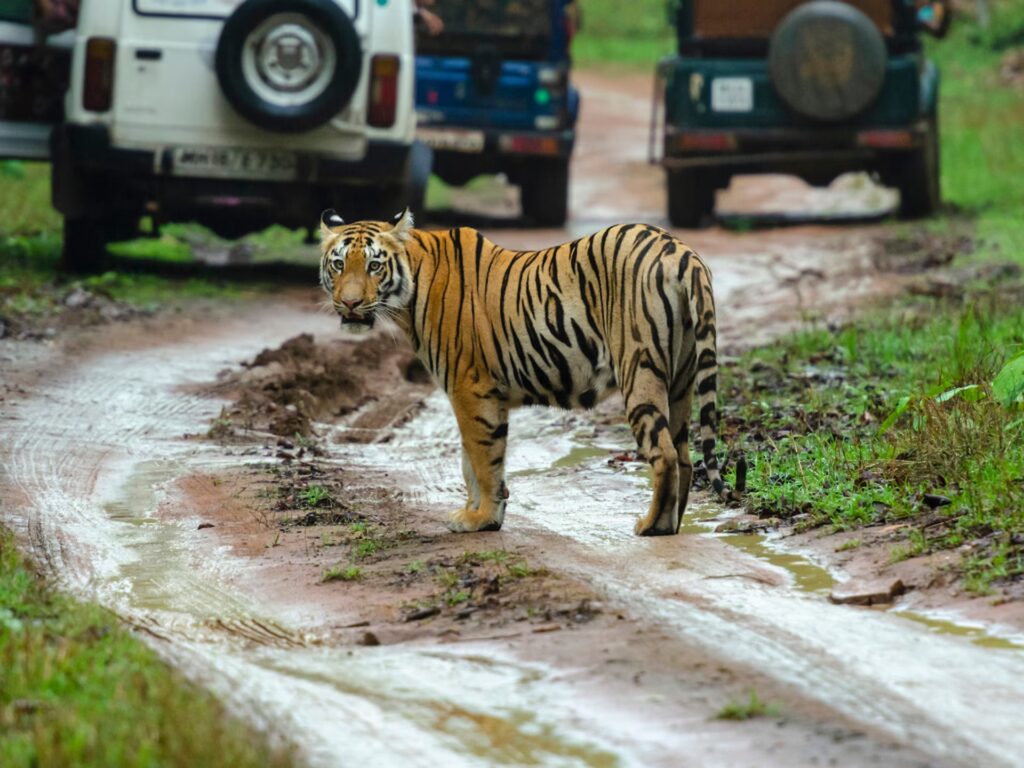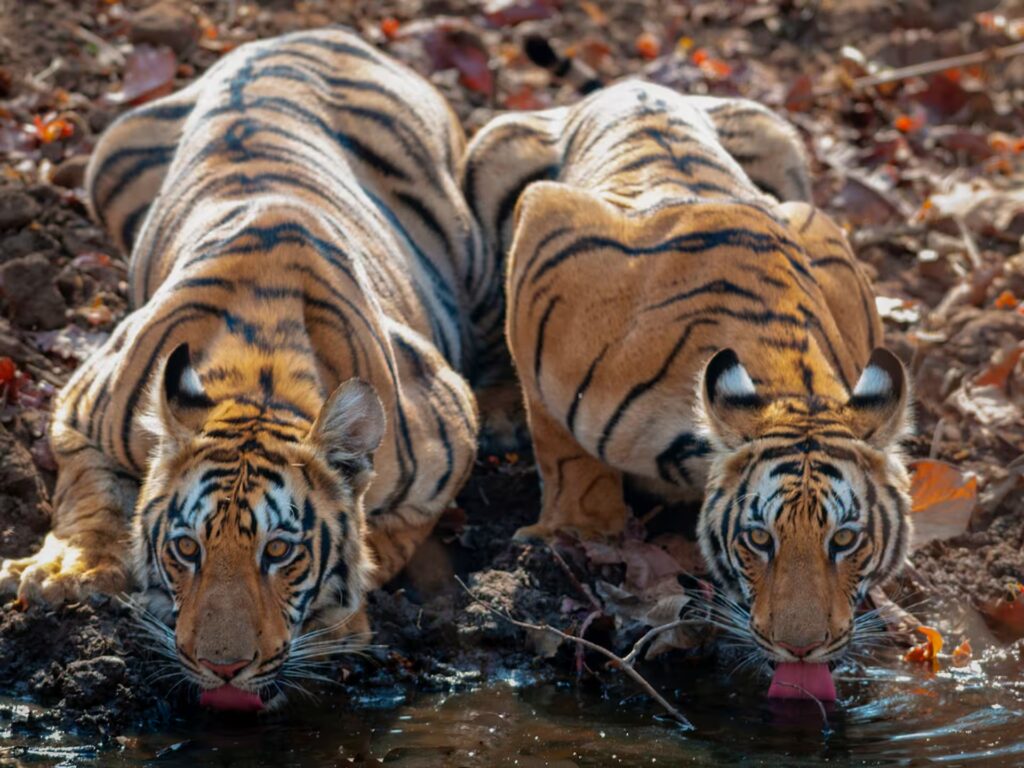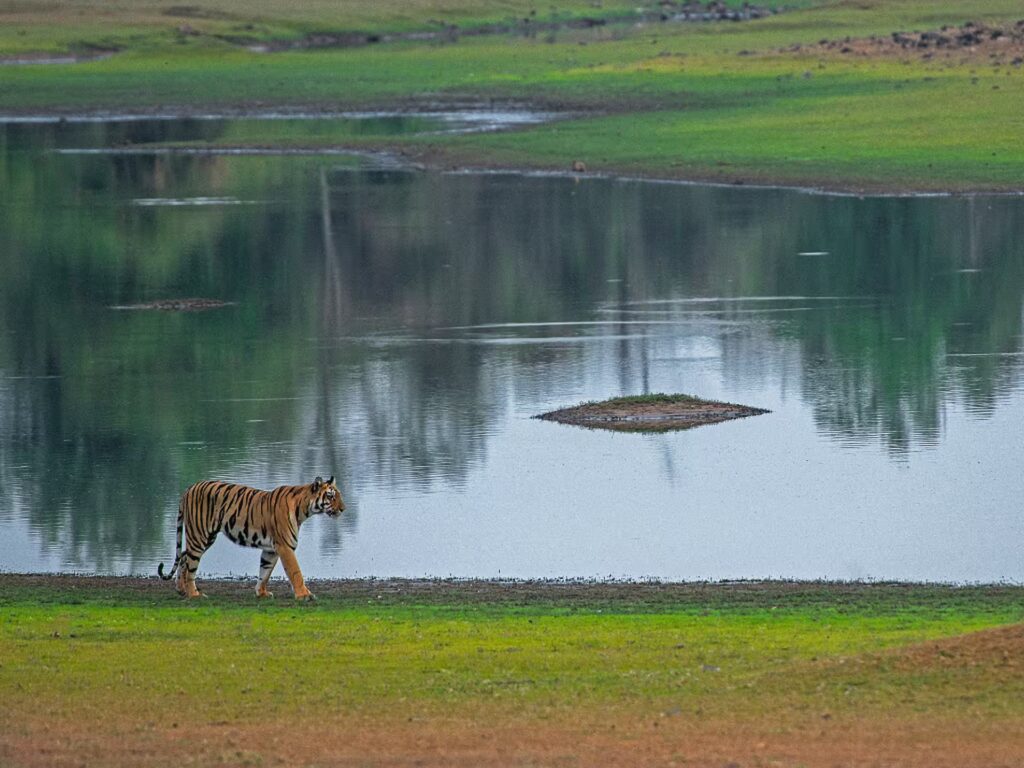
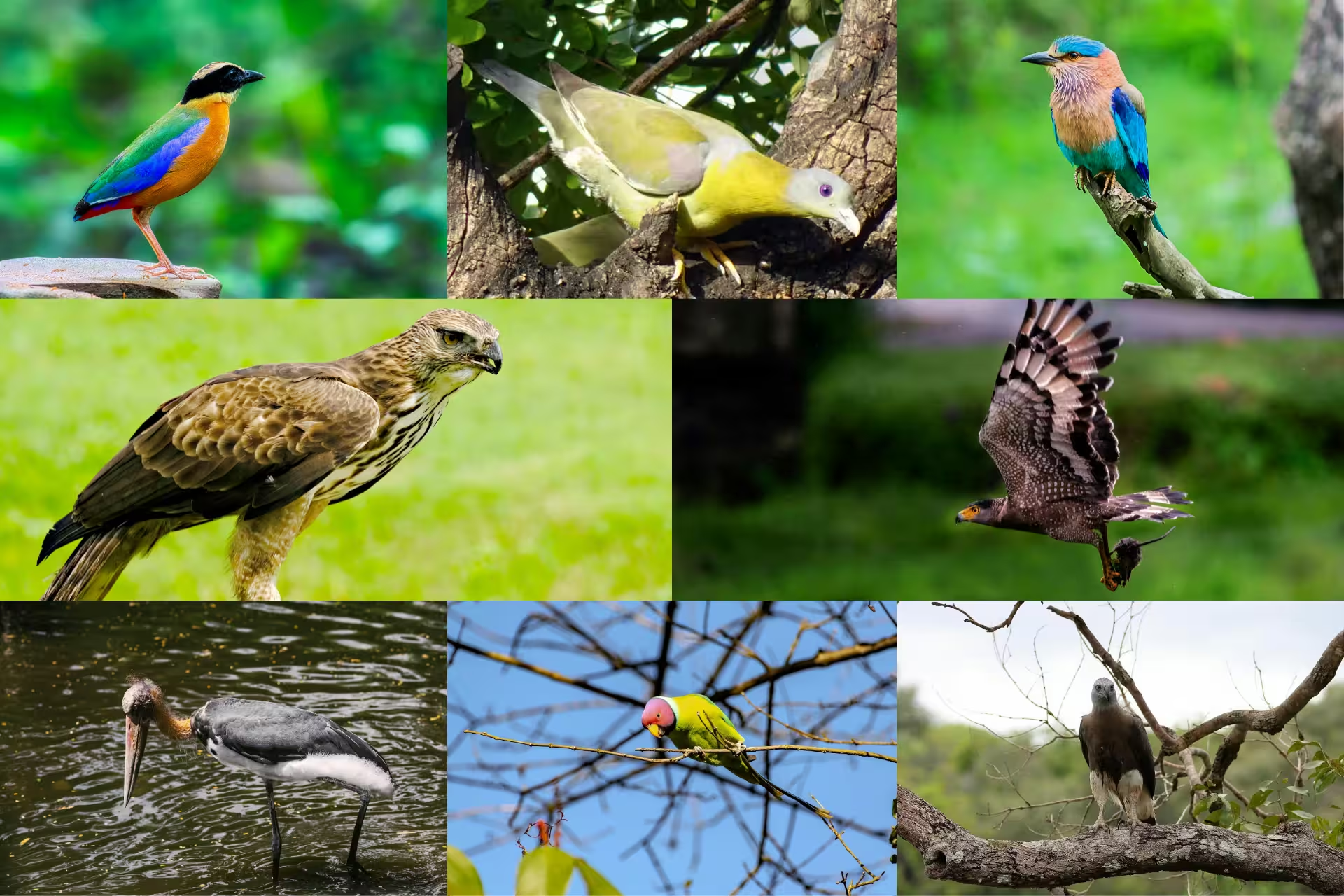
Tadoba-Andhari Tiger Reserve is known for bold tiger sightings, but its lakes and dry forests support strong bird diversity.
The presence of Tadoba Lake and other water bodies makes this park different from Kanha, Pench, or Bandhavgarh. Here, birding is not only about forest edges but also about scanning wetlands.
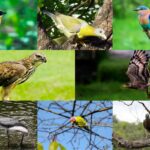
Here are ten birds that stand out in Tadoba.
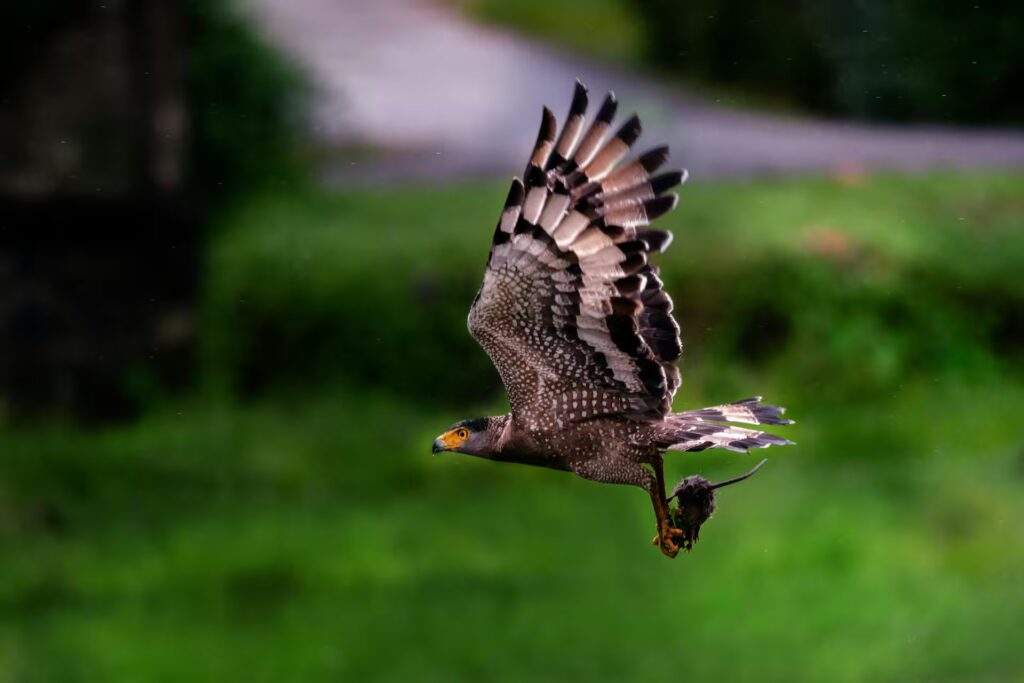
Crested Serpent Eagle
This is one of the most reliable raptors in Tadoba. You’ll often see it perched on exposed branches near water bodies or forest clearings. It feeds mainly on snakes and reptiles, so sightings are common near bamboo patches and rocky edges.
The loud, whistling call carries far during summer.
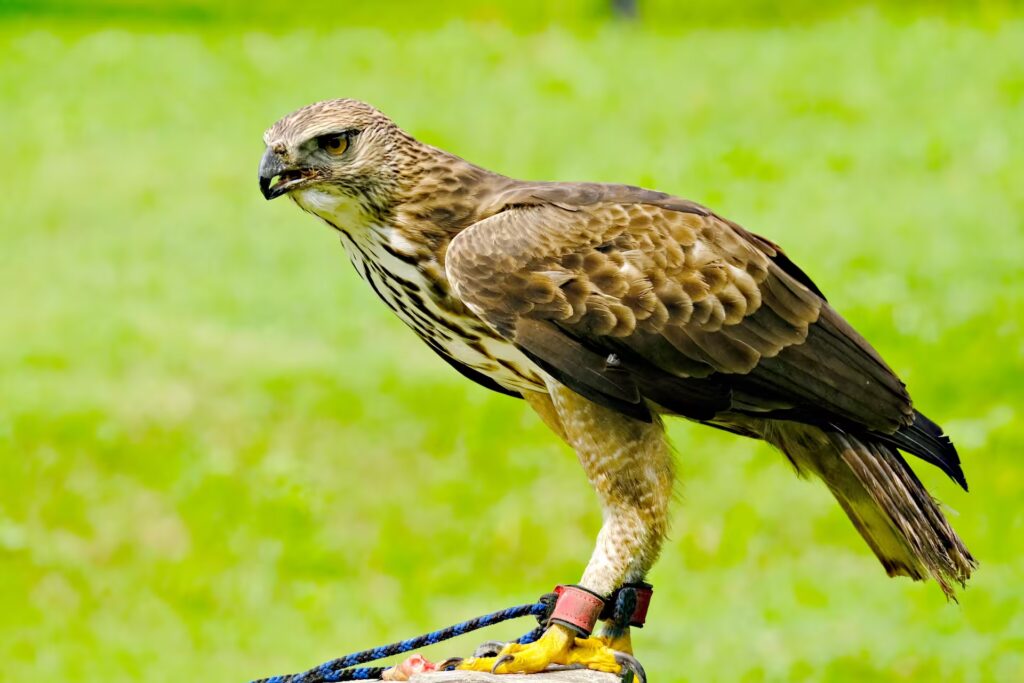
Changeable Hawk-Eagle
Less common than the serpent eagle but far more dramatic. Look for it in mature teak forest areas. It prefers tall trees and hunts birds and small mammals.
If you see a large eagle sitting upright with long legs and intense yellow eyes, stop and observe carefully.
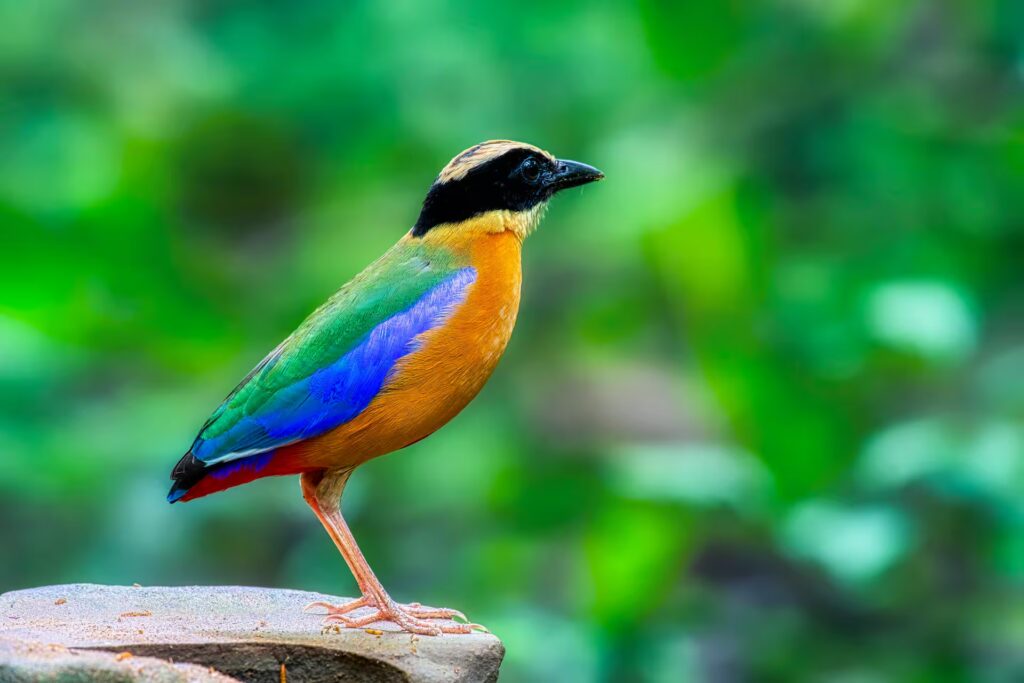
Indian Pitta
During summer and early monsoon, this colourful ground bird becomes active. It prefers leaf litter in shaded forest sections.
Tadoba’s mixed deciduous forest gives it good cover. Early morning drives offer the best chance.
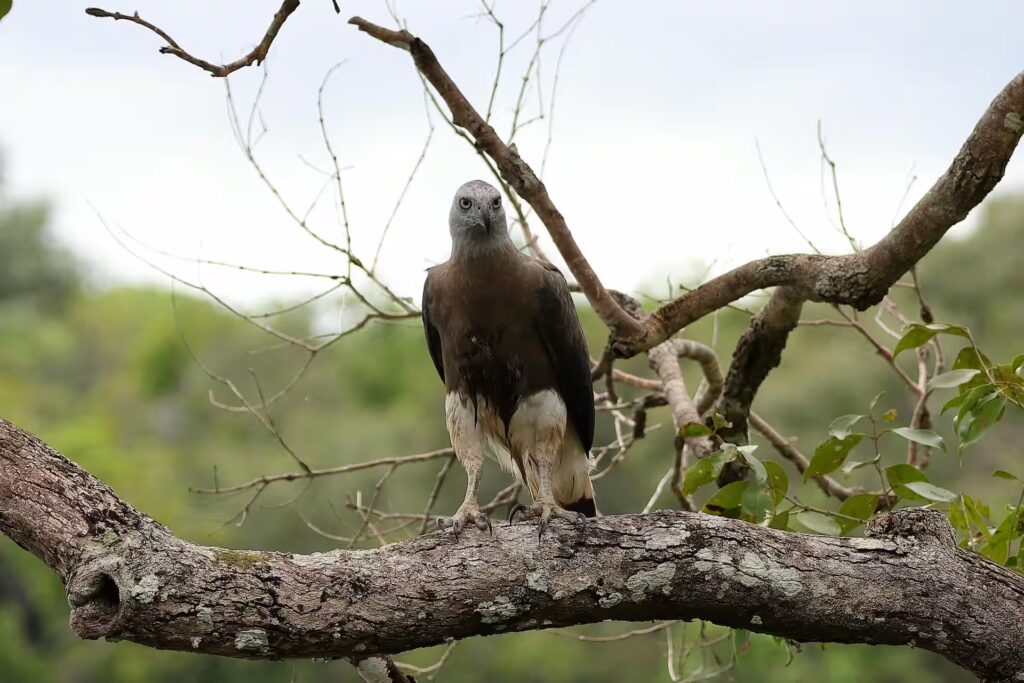
Grey-headed Fish Eagle
Seen around Tadoba Lake and other water bodies. It sits quietly near water and dives for fish.
It’s not as common as in Corbett or Kaziranga, but when spotted, it’s a strong highlight for birders.
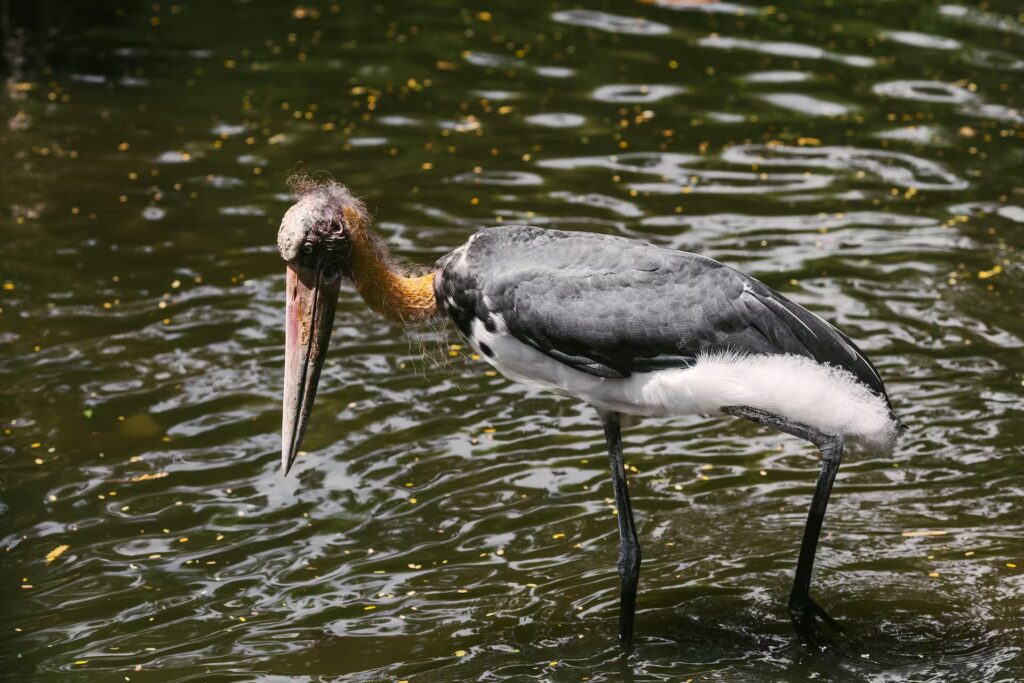
Lesser Adjutant Stork
One of the more surprising birds of Tadoba. These large storks are often seen near wetlands or open marshy edges.
Their prehistoric appearance makes them easy to identify even from a distance.
Painted Spurfowl
A true central Indian specialty. This ground-dwelling bird prefers rocky slopes and scrub forest near buffer zones.
You’ll usually hear it before you see it. Quick movement across forest roads often gives away its presence.
White-eyed Buzzard
Common in open grassland patches and forest edges. It often perches low and scans for small prey.
The clear white iris makes identification easy.
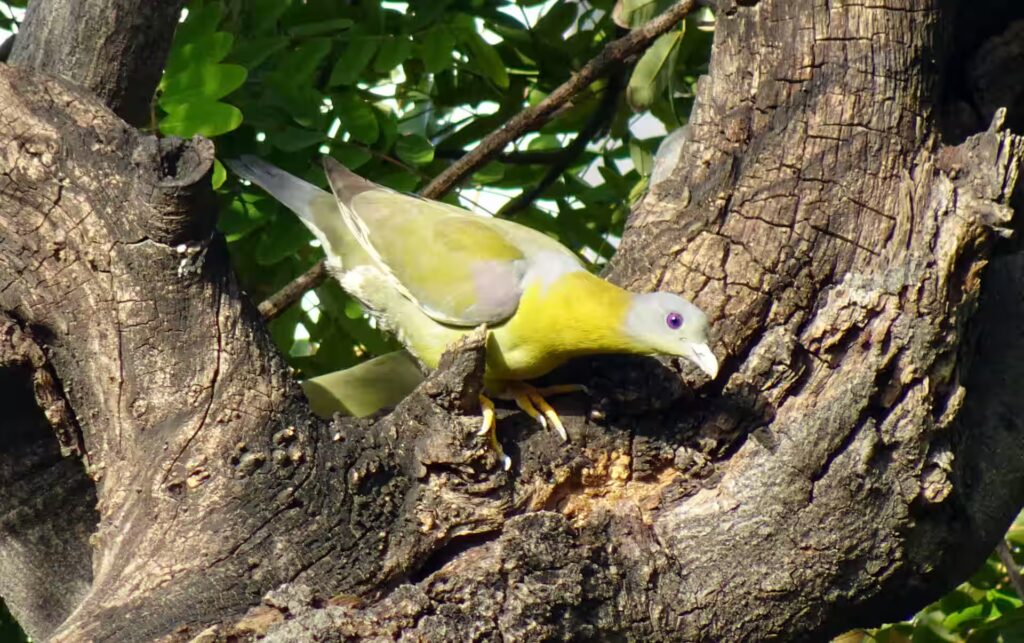
Yellow-footed Green Pigeon
Frequently seen feeding in fruiting trees. Tadoba has good populations due to mature tree cover.
They sit quietly in flocks, so scan carefully.
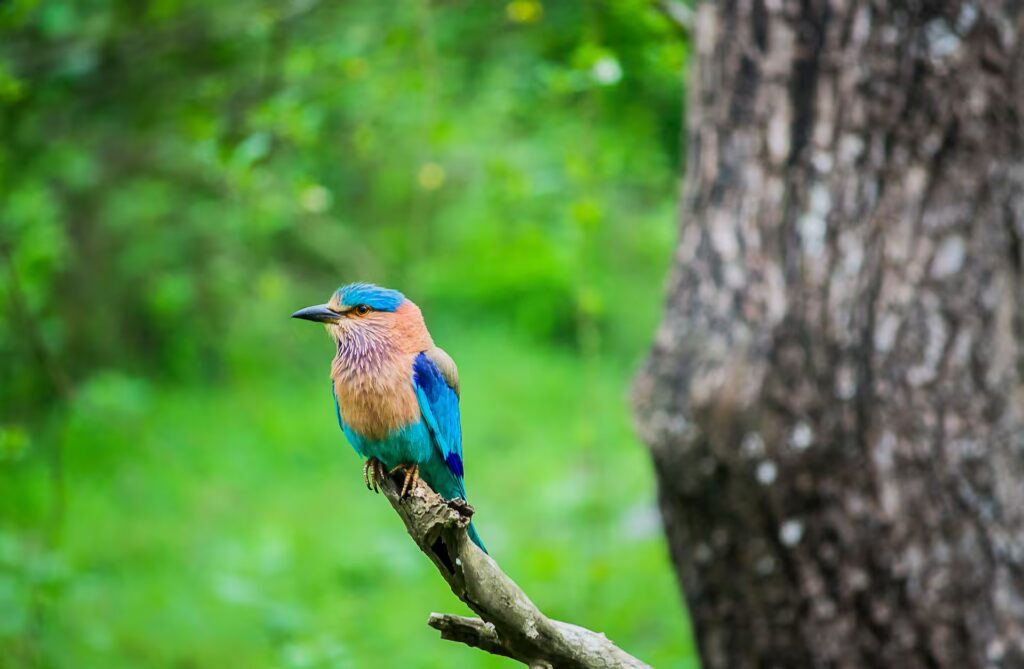
Indian Roller
Seen along safari roads and open meadows. It hunts insects from exposed perches.
During flight, its electric blue wings stand out clearly.
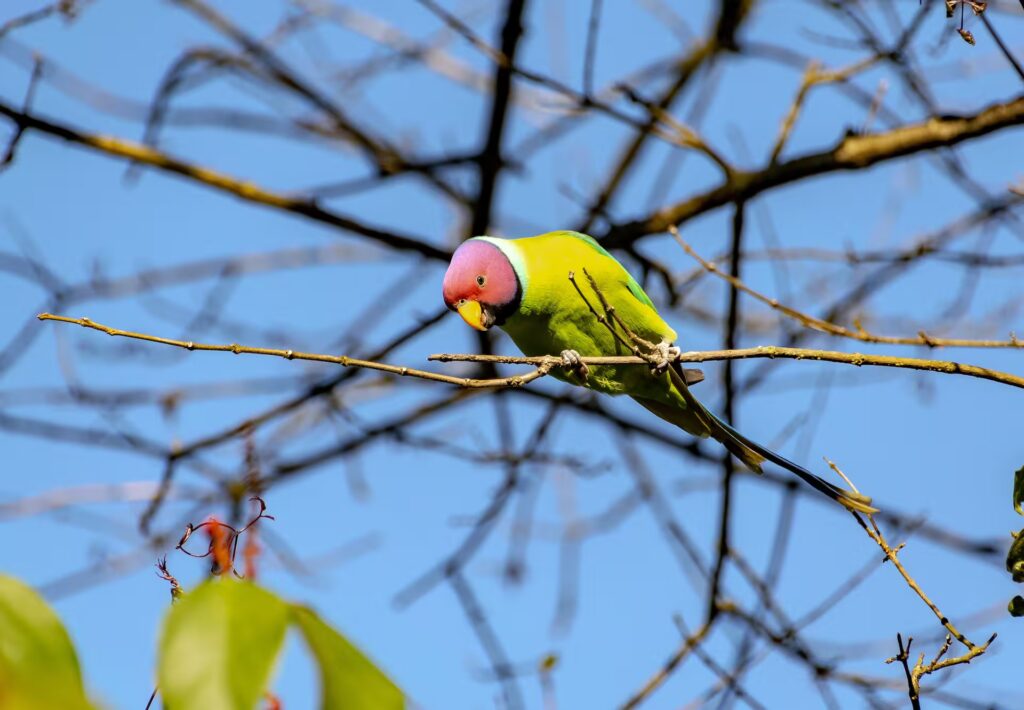
Plum-headed Parakeet
More forest-dependent than the common rose-ringed parakeet. It prefers quieter interior zones.
Males show a distinct plum-coloured head, especially visible in good morning light.
What Makes Birding in Tadoba Different?
Tadoba stands out because of:
- Large permanent water bodies
- Open dry forest patches
- Strong raptor and waterbird mix
Compared to Bandhavgarh:
- More water-focused birding
- Better chances of wetland species
- More open photography opportunities
Compared to Kanha:
- Less grassland specialists
- More lake-dependent birds
Compared to Panna:
- Fewer cliff raptors
- Stronger waterbird presence
Here, you split your attention between treetops and lake surfaces.
Best Time for Birdwatching in Tadoba
- October to February – Best for migratory waterbirds
- March to May – Good visibility as foliage thins
- Early mornings – Ideal around lakes
Winter improves diversity due to visiting species.
Practical Birding Tips for Tadoba
- Slow down near Tadoba Lake
- Scan dead trees near water for fish eagles
- Watch open clearings for storks
- Buffer zones can also produce strong sightings
Core zones offer the best mix, but buffer routes can surprise you.
Final Thoughts
Tadoba gives you water and woodland together.
It feels more spacious than Bandhavgarh and less meadow-dominated than Kanha. Birding here rewards patience around lakes. Book your safari now.