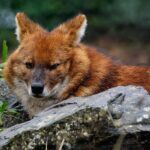
Indian wild dogs, locally called dholes, are one of the hardest animals to spot in Tadoba Andhari Tiger Reserve. Not because they hide well, but because there are so few of them. Tadoba’s dhole population sits somewhere between 20 and 35 individuals, spread across packs of 5 to 15. Compare that to the reserve’s tiger count of 80+ and you start to understand why a dhole sighting is worth more to most wildlife photographers than a tiger.
This post covers what dholes actually do: how they behave, how they hunt, and where in Tadoba you’re most likely to see them.
What Is a Dhole?
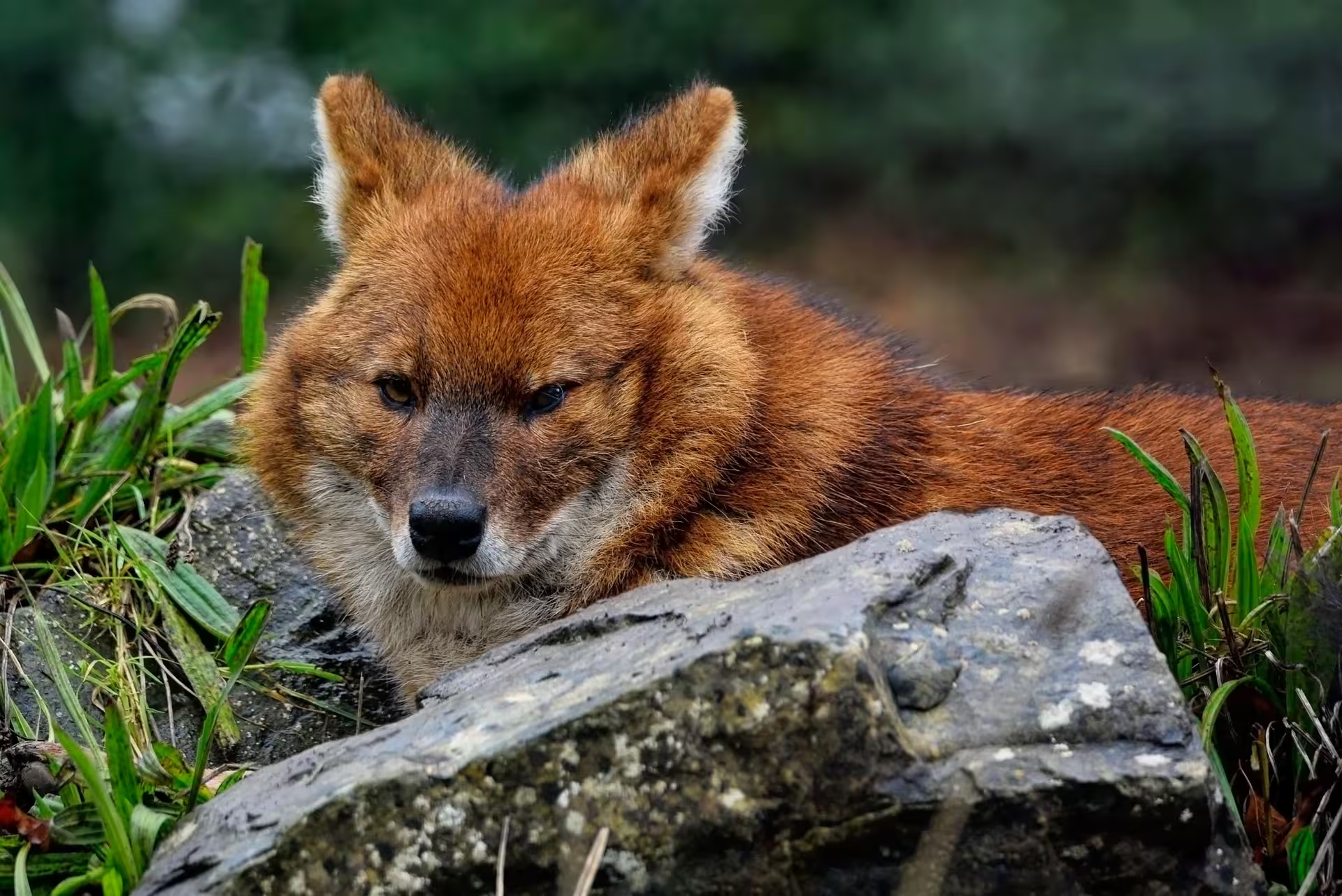
The dhole (Cuon alpinus) is neither a dog nor a wolf in any domestic sense. It’s a separate genus entirely.
Key facts:
- IUCN Status: Endangered
- Weight: 12 to 18 kg
- Pack size in Tadoba: Typically 6 to 12 individuals
- Lifespan: 10 to 13 years in the wild
- Local names: Dhole, red dog, jangli kutta (wild dog in Marathi/Hindi)
Their coat runs rust-red to brown-grey depending on the season. The belly is paler. Unlike wolves, they have a shorter muzzle, rounded ears, and a dark bushy tail. You won’t confuse them with a stray dog once you’ve seen them together. Dholes move with a specific fluid gait that domestic dogs don’t have.
What makes them unusual among canids:
- They communicate through whistles and clucks, not howls
- They have fewer teeth than most canids (one fewer lower molar)
- Multiple females in a pack can breed in the same season
- Pack members actively regurgitate food for pups and injured adults
Dhole Distribution in Tadoba
Dholes don’t spread evenly across the reserve. They follow prey concentrations and avoid open roads where possible.
Zones with recorded dhole activity:
| Zone | Activity Level | Notes |
|---|---|---|
| Moharli | High | Most consistent sightings, dense teak and bamboo |
| Kolsa | Moderate to High | Buffer zone, good water availability |
| Navegaon-Nagzira (adjoining) | Moderate | Occasional packs crossing the corridor |
| Panderpauni | Low to Moderate | Tiger pressure keeps dholes out of core areas |
Dhole Distribution in Tadoba
Dholes don’t spread evenly across the reserve. They follow prey concentrations and avoid open roads where possible.
Zones with recorded dhole activity:
| Zone | Activity Level | Notes |
|---|---|---|
| Moharli | High | Most consistent sightings, dense teak and bamboo |
| Kolsa | Moderate to High | Buffer zone, good water availability |
| Navegaon-Nagzira (adjoining) | Moderate | Occasional packs crossing the corridor |
| Panderpauni | Low to Moderate | Tiger pressure keeps dholes out of core areas |
Pack Structure and Social Behaviour
A dhole pack isn’t random. It has a clear structure built around a dominant breeding pair, but unlike wolf packs, the hierarchy is loose. Subordinate members participate fully in hunts and pup care without the rigid rank-displays you see in wolves.
Pack roles:
- Alpha pair: Primary breeders who set the direction of hunts
- Subordinates: Non-breeding adults who hunt, guard the den, and feed pups
- Yearlings: Learning hunters, often assigned to flank positions during chases
Communication: Dholes use a range of sounds. The most distinctive is a high-pitched whistle used to regroup after a hunt breaks up. They also use:
- Whines for close-range pack coordination
- Growls and barks as threat signals
- Body postures (tail position, head carriage) for dominance and submission
Pup season in Tadoba runs roughly December to March. The pack uses natural rock crevices, dense bamboo thickets, or abandoned porcupine burrows as dens. During this period, non-breeding adults stay close to the den and ferry food back to nursing females and pups.
Hunting Patterns: How Dholes Take Down Prey
This is what most people want to know, and it’s one of the more efficient predation strategies in the forest.
Primary Prey in Tadoba
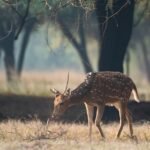
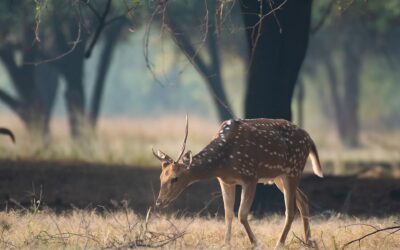
- Spotted deer (chital): Most common prey item, 40 to 60 kg
- Sambar deer: Larger target, 150 to 200+ kg, requires the full pack
- Wild pig: Taken opportunistically
- Gaur calves: Rare. Adult gaur are too large and dangerous
- Langur and small mammals: Taken by pups and juveniles occasionally
The Chase Strategy
Dholes are coursing predators. They run prey into exhaustion rather than relying on a single ambush strike. A typical hunt looks like this:
- Scent and track: The pack picks up scent trails at dawn or dusk, often near waterholes or game trails
- Flush and chase: One or two dogs start the chase, the rest fan out to cut off escape routes
- Relay running: Fresh dogs move to the front as leaders tire, keeping chase speed high over 2 to 5 km
- Kill: Unlike cats, dholes don’t go for the throat first. They bring prey down by attacking the flanks and hindquarters simultaneously, then disembowel quickly
The entire kill sequence for a chital takes 3 to 10 minutes once the animal is brought down. For sambar, it can run 20 to 40 minutes. Dholes maintain 45 to 55 km/h in short bursts during the chase.
Hunt success rate: Studies across India put dhole hunt success at 50 to 70%, significantly higher than tigers (10 to 20%) and leopards (30 to 40%). They fail most often when prey reaches water (dholes are cautious swimmers) or dense thorny scrub.
Pack Size and Prey Size
Pack size directly determines what they can hunt:
- 3 to 5 dogs: Chital, wild pig
- 6 to 10 dogs: Sambar, nilgai
- 10+ dogs: Can hold off tigers from a kill, occasional gaur calf attempts
Dholes and Tigers: What Actually Happens
This is a real interaction, not just an occasional fluke. Tigers and dholes share prey species and territory in Tadoba. The general pattern:
- Tigers steal dhole kills. A pack that has just brought down a sambar will abandon it for a tiger 90% of the time. The energy cost of fighting a tiger is not worth a half-eaten sambar.
- Large packs hold their ground. Packs of 10+ dogs have been documented harassing and chasing off individual tigers, particularly sub-adults or females without cubs.
- Dholes kill more often, tigers eat better. Dholes compensate for losing kills by hunting more frequently, not by fighting back.
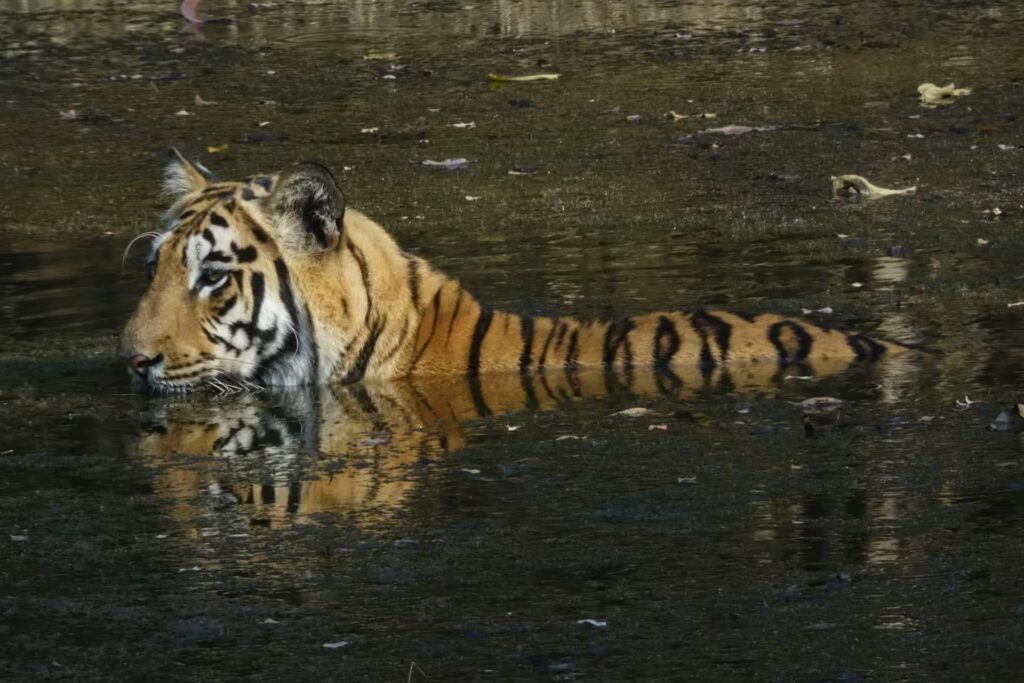
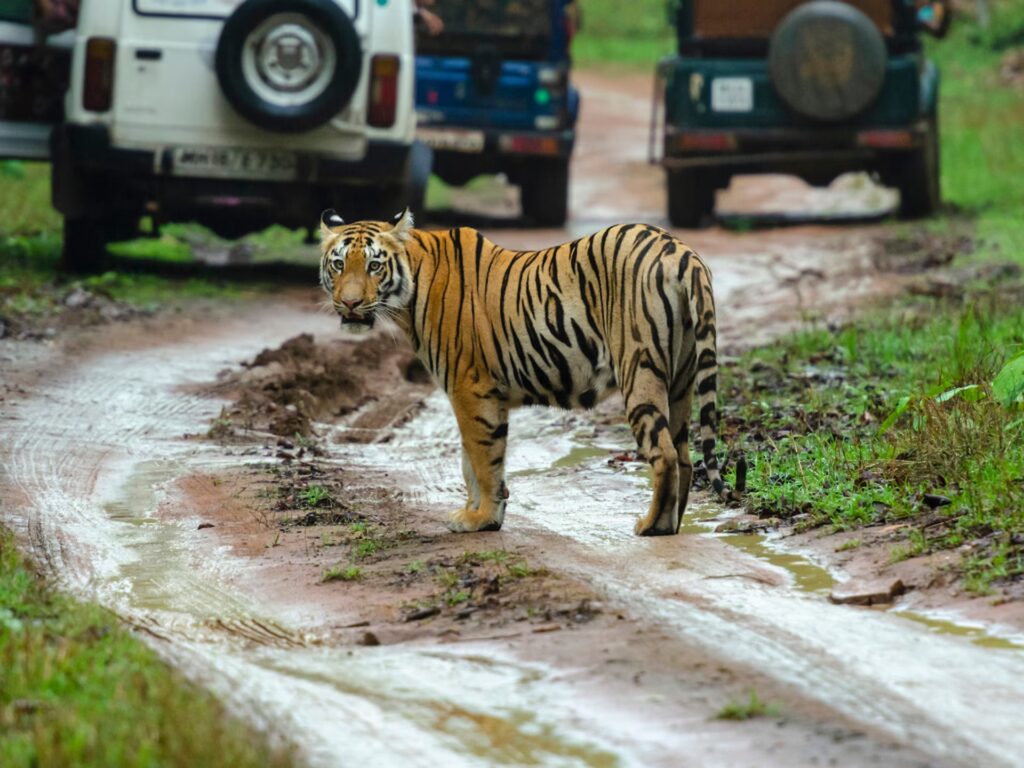
Safari guides in Moharli report that finding a dhole pack mid-hunt is one of the more reliable ways to predict a tiger nearby within the next 30 minutes. Tigers follow dhole noise.
Best Time and Zones to Spot Dholes in Tadoba
Season: October to May. Avoid July to September (monsoon, park partly closed, dholes stay in deep cover).
Peak months: February to April. Pups are mobile, pack activity is high, and water concentrations make movement predictable.
Time of day:
- Dawn safari (6:00 to 9:30 AM): Best option. Dholes are most active at first light and often visible on open tracks.
- Afternoon safari (3:00 to 6:30 PM): Second best. Evening hunts happen as temperatures drop.
- Midday: Packs rest in shade. Sighting chance drops sharply.
Zones ranked for dhole sightings:
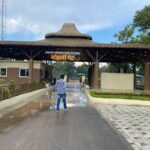
- Moharli Gate: Highest sighting frequency, most experienced guides for predator tracking
- Kolsa Gate: Less safari traffic, quieter buffer roads, good for extended tracking
- Navegaon entry: Viable if visiting the wider landscape, but fewer resident packs
Specific spots to ask your guide about:
- Telia Lake road (Moharli zone): Dholes water here in the dry season
- Bamboo corridors near Agarzari: Regular pack movement recorded
- Open grassland patches near Navegaon: Good visibility if a pack is on the move
Practical Notes for Spotting Dholes on Safari
- Tell your naturalist before you enter that dholes are a priority. Guides default to tiger routes unless told otherwise.
- Listen for alarm calls. Chital give a sharp repeated bark when dholes approach, which is different from the single bark for tigers. Sambar give a loud bell-like call. Both are useful indicators.
- Don’t expect them to stop. Dholes on a hunt move fast and don’t pause for photographs the way tigers often do. Bring a lens with fast autofocus.
- Pack size tells you a lot. A pack of 3 to 4 with small pups is post-breeding and probably not hunting far from the den. A pack of 8 to 12 adults moving at dawn is likely heading to a hunting ground.
Why a Dhole Sighting Matters
Tadoba’s dhole population is small and it fluctuates. Canine distemper outbreaks (2019 was a bad year across several Indian reserves), habitat fragmentation, and prey competition all affect numbers. Seeing a functioning pack with pups is a direct sign the ecosystem is in reasonable shape.
A morning where you watch a dhole pack coordinate a chital hunt across 3 km of mixed teak forest is a different experience from most wildlife encounters. It’s faster than a tiger sighting, considerably noisier, and usually over before you’ve fully worked out what just happened.
Plan Your Tadoba Safari
Tadoba Tiger Safari runs guided safaris into Moharli, Kolsa, and surrounding buffer zones with naturalists who track both tiger and dhole movement. For dhole-focused itineraries, February to April morning slots at Moharli or Kolsa gates give the best odds.