Why Tadoba Lake Is the Best Spot to Watch Marsh Crocodiles
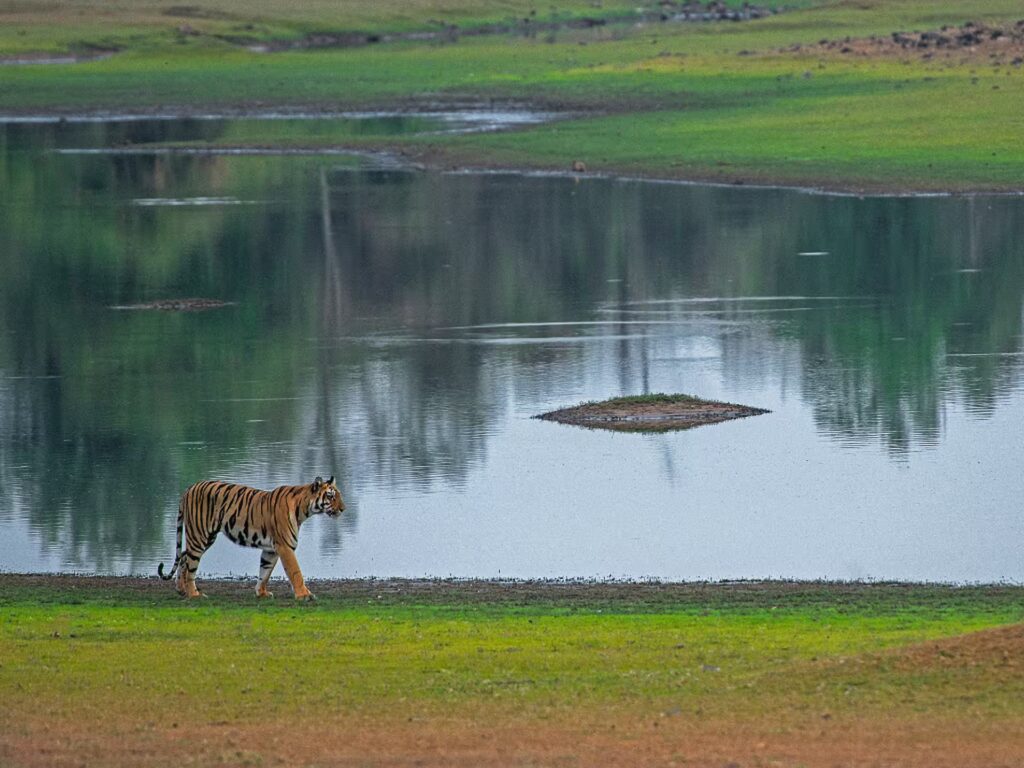
Tadoba Lake sits within the core zone. Most safari routes pass directly along its banks. Shallow edges and open mudflats make crocodile activity visible in a way that riverine habitats rarely allow.
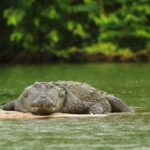
The mugger crocodile (Crocodylus palustris) has lived in and around this lake for decades. Sightings are not lucky – they are almost guaranteed during the right season.
What makes Tadoba different is accessibility. You can watch a three-metre crocodile bask, scan the shallows, or drag itself onto a mud bank without moving more than fifty metres from your jeep.
How Marsh Crocodiles Hunt Around Tadoba Lake
Mugger crocodiles are ambush hunters. They do not chase prey. They position themselves in shallow water near the bank and wait.
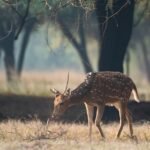
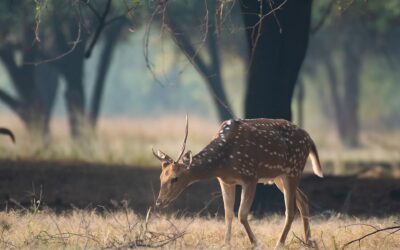
At Tadoba Lake, sambar deer and chital come to drink at predictable hours. The crocodile knows this. It sinks almost completely below the surface, leaving only eyes and nostrils exposed, and holds that position for over an hour.
The strike is over in under a second.
Muggers also take fish, frogs, and waterbirds. A large adult at Tadoba can bring down a fully grown sambar without help. After a large kill, it will not feed again for days.
Watch for cooperative feeding when multiple crocodiles converge on a single kill. They twist in the water to tear off sections. It is not coordinated hunting. It is raw opportunism – and it is striking to witness.
What Basking Actually Means for a Mugger Crocodile
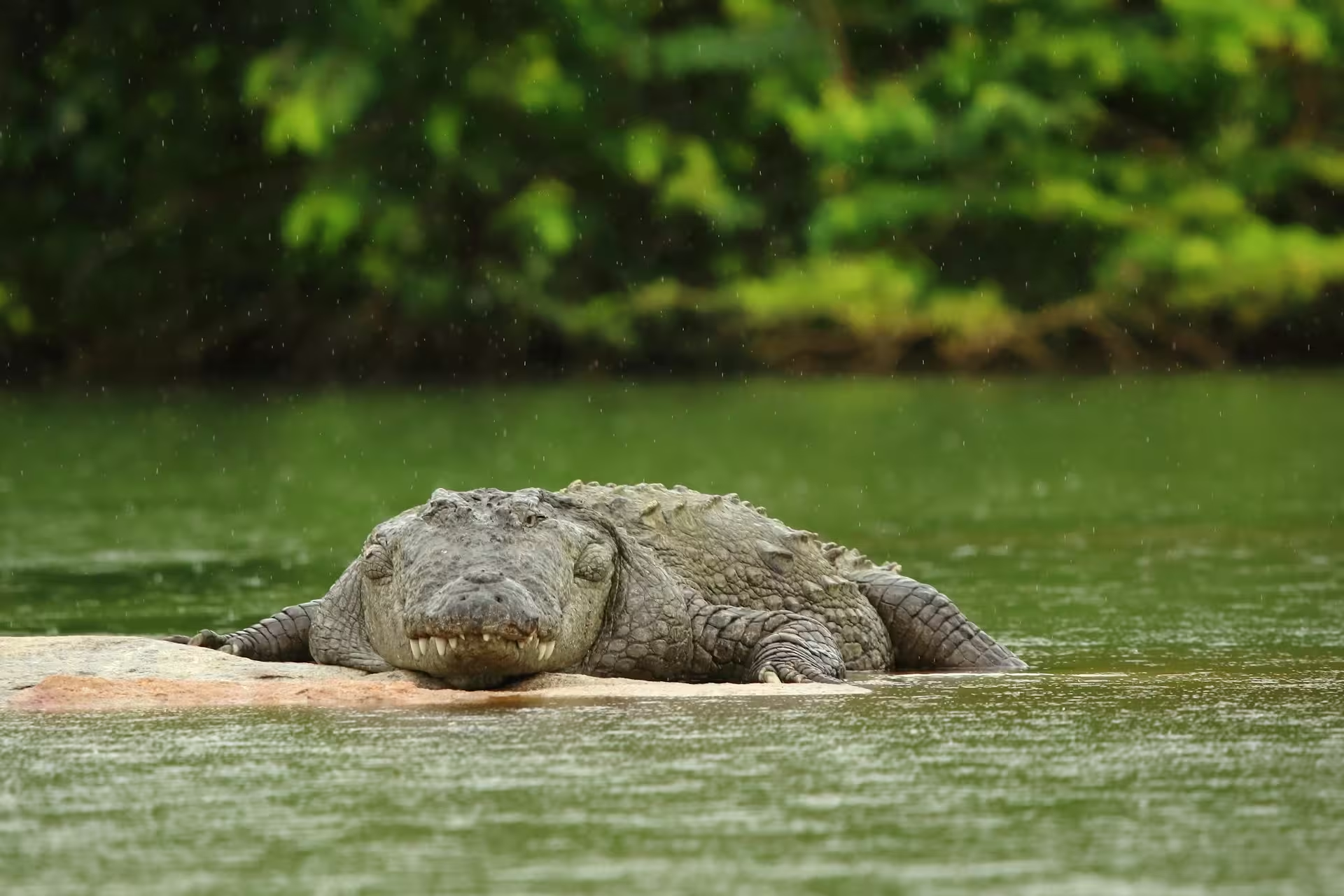
A crocodile lying motionless on a mud bank with its mouth open is not lazy. Muggers are ectothermic. They depend entirely on external heat to regulate body temperature.
Basking after feeding is essential for digestion. The open mouth is thermoregulation, not aggression. Small birds occasionally perch near it to pick food debris from between the teeth.
Early morning basking at Tadoba is reliable and photogenic. Crocodiles emerge soon after sunrise, position themselves facing the sun, and return to water once their body temperature stabilises around mid-morning.
Nesting Season and Protective Behaviour Near the Lake
February to March is nesting season. Females dig nest holes in elevated sandy ground near the lake and lay between 25 and 45 eggs.
The female rarely leaves the nest site during this period. She becomes visibly territorial. Keep noise low and maintain distance from any crocodile positioned away from the water – it is likely guarding a nest.
Eggs incubate for roughly 55 to 75 days. When hatchlings emerge, the mother carries them to the water in her mouth. Hatchlings cluster near her for several weeks along the lake’s edge.
Best Times to Watch Crocodiles at Tadoba Lake
Timing changes everything here.- 6 AM to 8 AM – Peak basking. Crocodiles most visible on mud banks along the western edge.
- 7 AM to 9 AM – Drinking herds arrive. Highest-risk window for ambush attempts.
- 10 AM to 4 PM – Most crocodiles return to water. Large adults remain visible in shallows.
- 4 PM to 6 PM – Second feeding window. Crocodiles reposition as evening herds return.
Tigers, Otters, and the Shared Life of Tadoba Lake
Tadoba Lake belongs to everyone in the ecosystem.
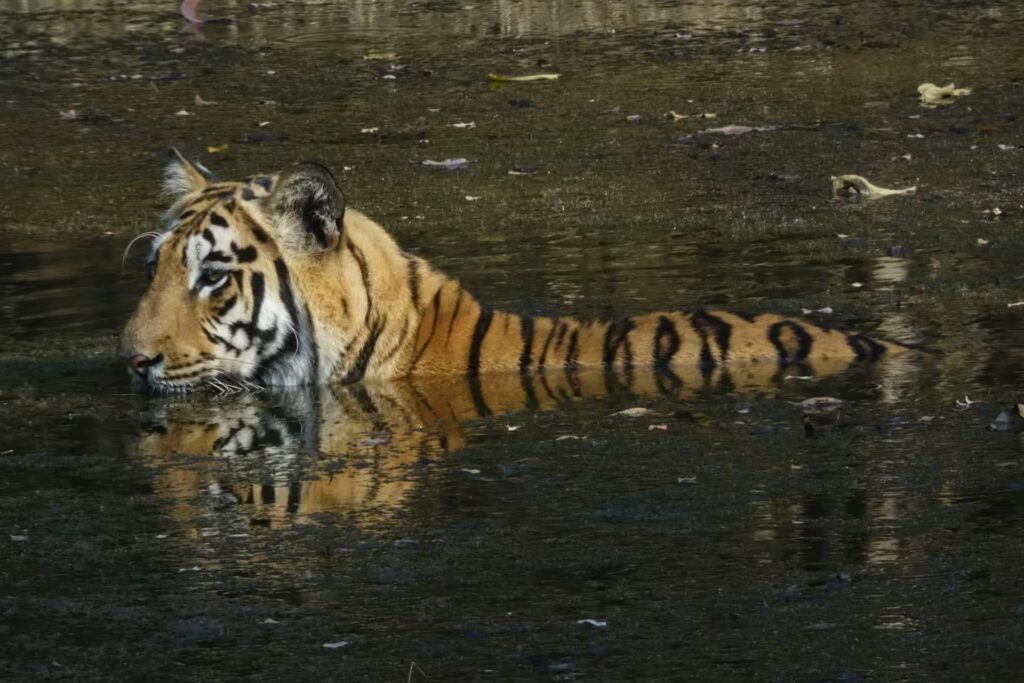
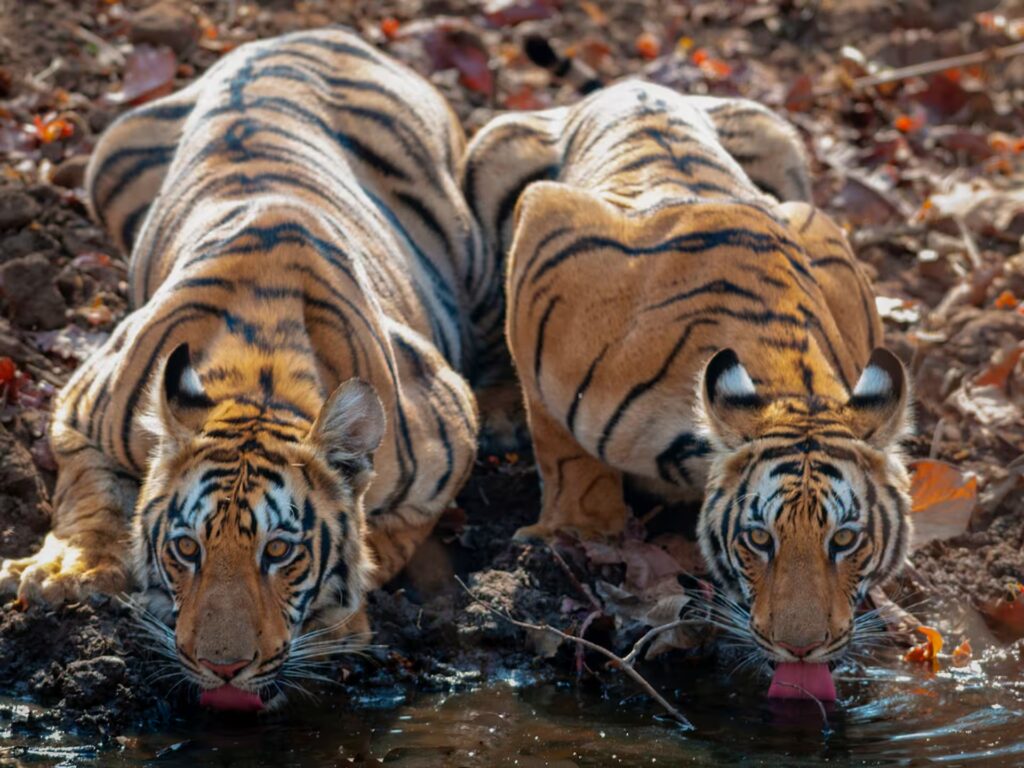
Tigers drink here regularly. Resident tigresses with cubs have been photographed within metres of basking crocodiles. Both animals largely ignore each other. The crocodile has no interest in a healthy tiger. The tiger has no reason to provoke a large reptile in shallow water.
Smooth-coated otters fish the same waters. Painted storks, lesser adjutants, and open-billed storks work the shallows alongside crocodiles with complete indifference.
Sitting quietly at the lake for thirty minutes produces more diverse wildlife observation than hours of driving through forest.
Safari Access and Approximate Costs for Tadoba Lake
Tadoba Lake falls within the core zone. A permit through the Maharashtra Forest Department portal is required.
- Core zone permit – approximately INR 3,500 to INR 5,000 per person
- Private jeep with naturalist – approximately INR 8,000 to INR 14,000 per safari
- Shared jeep through operator – approximately INR 2,500 to INR 4,000 per person
- Accommodation near Tadoba or Moharli gate – roughly INR 3,500 to INR 20,000 per night
Moharli gate gives the better approach angle for early morning crocodile viewing. Mention the lake specifically when briefing your driver.
What Most Visitors Get Wrong at Tadoba Lake
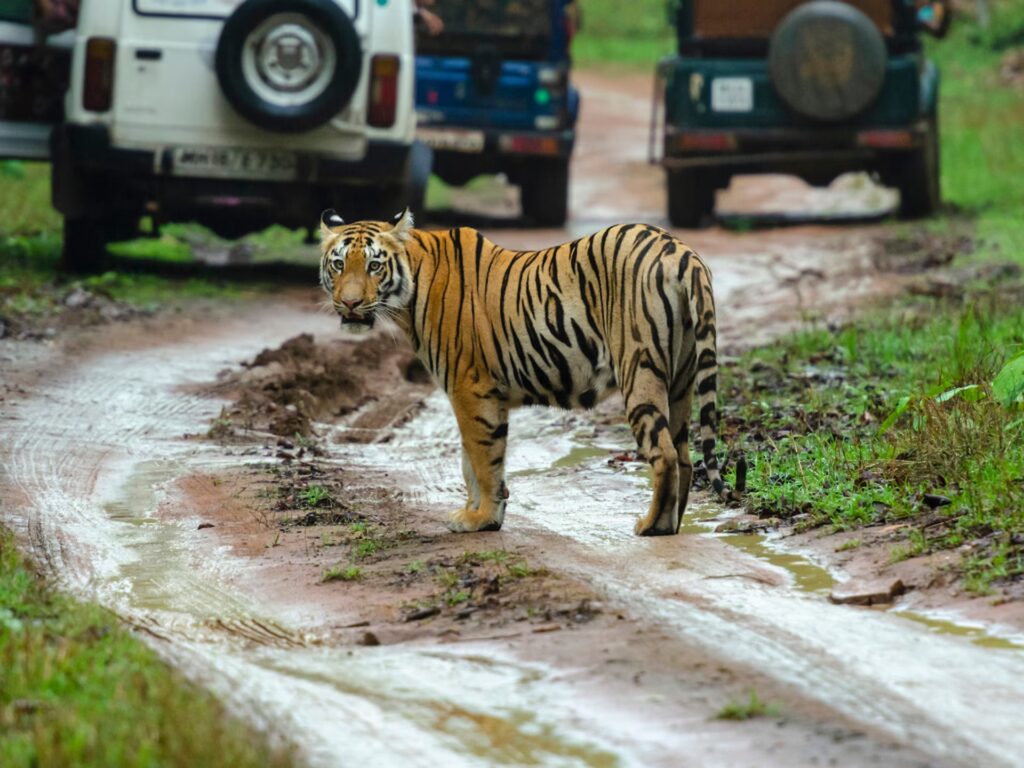
Most jeeps slow briefly at the lake, spot a crocodile, then move on looking for tigers.
That is the single biggest mistake at Tadoba.
Mugger crocodiles are not a consolation sighting. A large adult scanning the bank for movement is one of the most primal wildlife encounters in central India. These animals have changed almost nothing in over 200 million years.
Request at least two separate lake stops per safari – one in the first hour, one in the last. Bring binoculars. The far bank holds basking animals that jeeps never reach.
Permit windows open 90 days in advance. The lake is most dramatic from March to May when water levels drop, mudflats expand, and crocodile activity compresses into a smaller area. Sightings become more frequent, more intense, and far easier to photograph.